Short answer: there isn’t a single number
If you searched for “how many training treats can a dog have” you probably wanted a clear number. The reality is there’s no one-size-fits-all answer. The right amount depends on your dog’s size, age, activity level, usual diet, any health issues and the size and energy content of the treats you use.
Why simply counting treats can be misleading
When owners ask “how many treats can a dog have a day” they often mean pieces — but the physical count doesn’t tell the full story. Twenty tiny training pieces can amount to less food than one large chew. What matters is the portion and how those treats fit into your dog’s overall daily intake.
- Treat size: a pea-sized morsel is very different from a chunky cube.
- Treat energy: different products have different calorie or nutrient densities.
- Frequency of reward: short, repeated rewards during a session are usually tiny, whereas end-of-session rewards can be larger.
Treats are part of your dog’s daily food allowance
Treats should be considered alongside your dog’s normal food. Follow the feeding guidance provided with your dog’s usual diet and with any treats you buy. If you’re unsure about your dog’s nutritional needs or how to balance treats with meals, ask your vet or a qualified animal nutritionist for personalised advice.
Practical way to think about treat portions
Rather than fixating on numbers, try this approach: think in portions (tiny, small, medium) and plan training rewards as part of the day’s feeding. If you use higher-value treats for certain exercises, use smaller pieces the rest of the time or reduce kibble at mealtimes if advised by your vet.
Practical tips for managing treats during training
- Use small pieces for repetitions: For shaping or high-frequency work, cut treats into pea- to thumbnail-sized pieces so you can reward many times without giving too much food.
- Break larger treats: Many natural training treats can be broken into smaller pieces to stretch a pack further and avoid over-feeding.
- Vary rewards: Mix food rewards with praise, quick play, or a sniff break. This reduces reliance on food for every behaviour.
- Reserve very tasty pieces for proofing: Save a few larger or particularly tempting rewards for distracting environments or when you really need to secure a response.
- Plan training around meals: Short sessions before a mealtime can mean your dog is interested in small food rewards without adding too many extra calories — but always follow feeding guidance or your vet’s instructions.
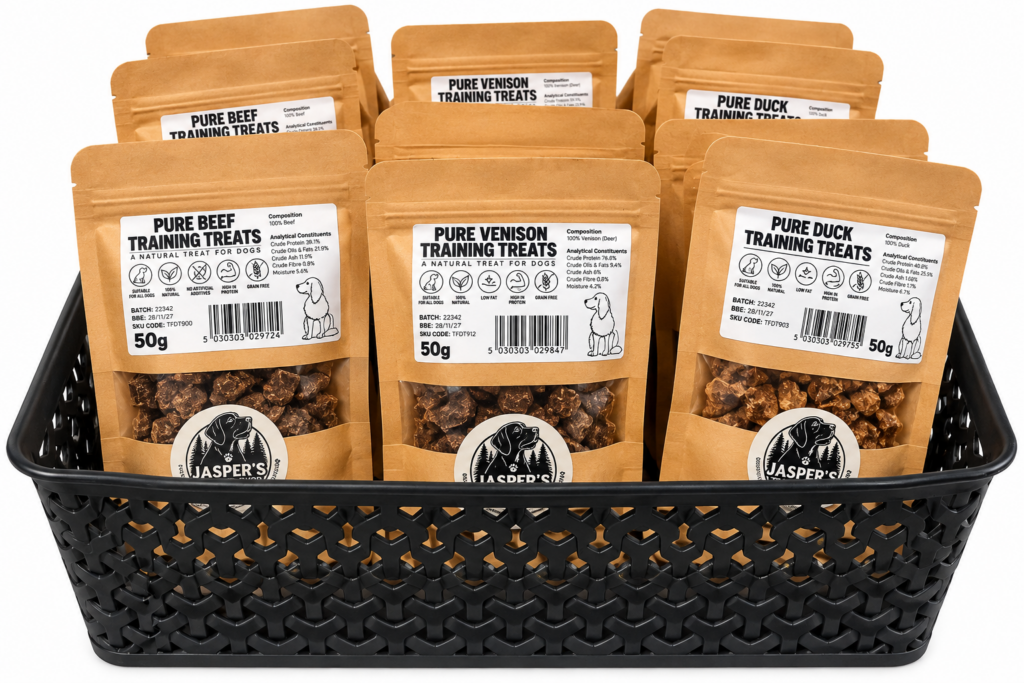
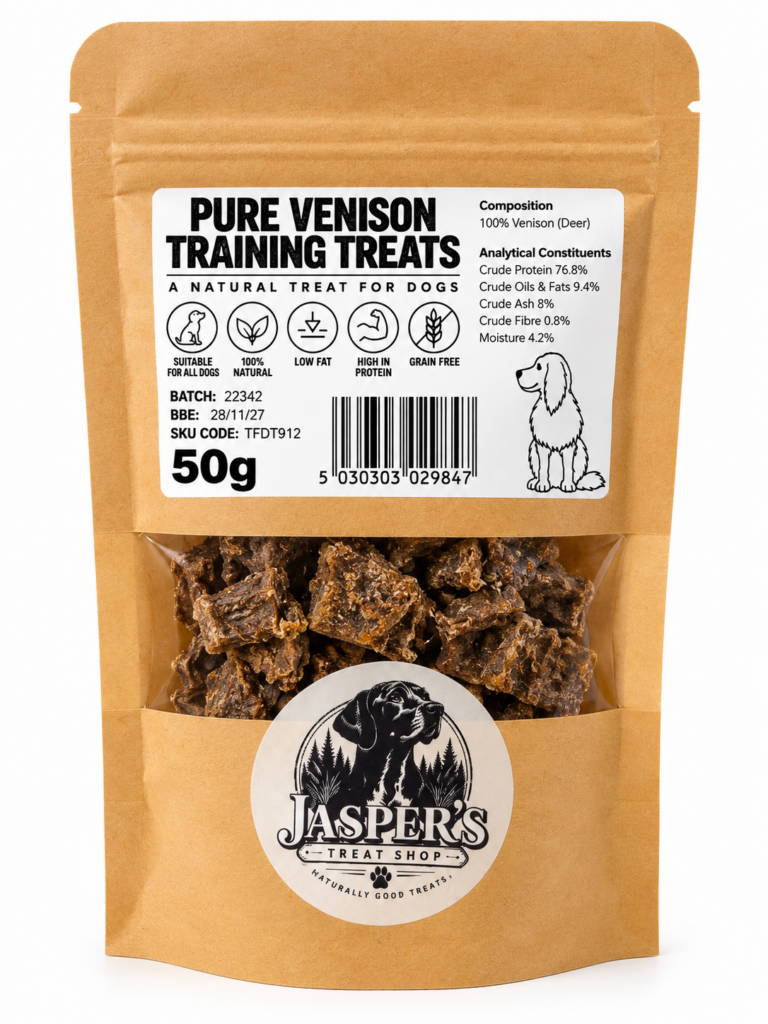
For handy, pocket-sized options for training sessions, consider Jasper’s Treat Shop pocket-sized Beef, Duck and Venison training treats. They’re designed with training in mind and can be used whole or broken into smaller pieces as needed: Pure Beef Training Treats, Pure Duck Training Treats and Pure Venison Training Treats.
How treat size and form affect training
Small, soft, quickly eaten treats are especially useful during learning because they allow fast reward cycles — cue, behaviour, immediate reward — which helps the dog link the action with the reward. Chewy or long-lasting treats can be useful as special rewards but aren’t ideal for high-repetition training.
Changing reward frequency over time
Training doesn’t need to rely on giving a food treat every single time forever. As a behaviour becomes established you can reduce the frequency of food rewards and substitute praise, a toy, or intermittent food rewards. That said, reinforcement schedules should be adjusted around your dog’s needs and the behaviour you’re training — there are no guarantees and different dogs respond in different ways.
Puppies and older dogs: extra considerations
Puppies have smaller stomachs and different nutritional needs, so treat portions should be especially small and training sessions short. Puppies are also still developing, so ask your vet about suitable treat choices and how treats should fit into their feeding plan.
Older dogs or dogs with medical conditions may need tailored advice about treats and food intake; always consult your vet if your dog has health issues or special dietary requirements.
Keeping an eye on safety and body condition
- Monitor your dog’s body condition and weight regularly. If they’re gaining weight unexpectedly, review how many treats you use and discuss with your vet.
- Watch for tummy upsets when introducing new treats or increasing quantity; stop and seek guidance if you see persistent changes in appetite, energy or stool.
- Be mindful of allergies or intolerances and choose treats suitable for your dog.
A simple method to decide sensible treat amounts (without numbers)
- Check the feeding guidance for your dog’s normal food and for any treats you buy.
- Decide how many training sessions you’ll do and whether you’ll need many small rewards or a few larger ones.
- Use small pieces for most repeats; save larger or more tempting pieces for proofing in distracting environments.
- If you’re adding a noticeable amount of treat food, discuss adjusting meal portions with your vet to keep overall daily intake balanced.
Resources and related reading
- Dog Training Treats category — browse pocket-sized options and other training treats.
- How to choose the best training treats for your dog — our guide to picking treats that suit training goals.
- What Are High-Value Dog Treats? — useful when planning rewards for tricky situations.
- Best treats for recall training — advice on rewards for a vital skill.
Summary: practical takeaways
- There’s no single correct number of training treats that applies to every dog.
- Think in terms of portion size and overall daily intake rather than just count of pieces.
- Use small pieces for high-repetition training and reserve higher-value pieces for proofing.
- Plan training rewards as part of your dog’s feeding routine and ask your vet if you’re unsure about balancing treats with meals.
If you’d like product ideas for pocket-sized training treats, take a look at Jasper’s pocket-sized Beef, Duck and Venison training treats linked above — and if you’re unsure what’s best for your dog, bring your questions to your vet or a registered pet nutrition adviser.
Frequently asked questions
Can a dog have too many treats?
Yes — too many treats can contribute to excess food intake and may affect body condition. Rather than counting pieces, consider the size and energy content of treats and how they fit into your dog’s overall daily feeding plan. If you’re concerned about weight or how many treats are appropriate, speak with your vet.
Do training treats count towards my dog’s daily food intake?
Yes. Treats form part of the daily intake and should be included when thinking about your dog’s feeding guidance. If you add a substantial number of treats, discuss with your vet whether meal portions should be adjusted.
Can I break training treats into smaller pieces?
Yes. Breaking treats into smaller pieces is a common and practical approach for high-repetition training. Many natural training treats can be split to stretch a pack and reduce portion size. Always check the product and follow any feeding guidance on the packet.
How does treat size affect training?
Small, quickly eaten treats allow rapid reward cycles, which helps link the behaviour to the reward during learning. Larger or chewier treats are better reserved for special rewards or particularly difficult situations where a stronger motivator is required.
Do puppies need different treatment with training treats?
Puppies generally need smaller portions and shorter, more frequent training sessions. Because their stomachs are small and nutritional needs are different, use tiny pieces and check with your vet about how treats should fit into their feeding plan.