Training a puppy is exciting — and rewards are central to helping them learn good habits. The right treats make training quicker and less stressful for both of you. This guide explains what to look for in puppy training treats, how to use them in common training situations and practical ways to give lots of tiny rewards without overfeeding.
What to look for in puppy training treats
When choosing treats specifically for training, prioritise features that keep sessions short, consistent and focused.
- Small size: Treats should be small so you can reward behaviour frequently without feeding large amounts. Think pea-sized pieces for most puppies.
- Quick to eat: Choose treats your pup can chew and swallow quickly so attention isn’t lost between cue, reward and repeat.
- Soft or easily portioned texture: Soft treats or ones that break into crumbs are handy for fast rewards; harder chews slow things down and are better for longer-lasting reward or enrichment.
- High palatability: Use something your individual puppy really likes when you need high-value rewards — for example, during recall training or in distracting environments. Different puppies prefer different flavours and proteins.
- Simple, recognisable ingredients: Look for treats with a short ingredient list so you can avoid anything you want to keep out of your puppy’s diet. Always read the packaging rather than relying on assumptions.
- Portable and tidy: Training often happens on the move. Small, resealable packs or compact pieces fit into pockets or treat pouches without getting messy.
Why very small rewards work especially well for puppies
Puppies learn best with lots of repetition over short sessions. Small rewards let you:
- reward frequently without giving too many calories;
- keep the session moving — quick reward, reset, repeat;
- gradually reduce food rewards as the behaviour becomes fluent, then move to intermittent reinforcement.
Because puppies have short attention spans, plan multiple brief sessions (a few minutes each) rather than one long session. The ability to give rapid, small rewards helps maintain motivation throughout those repeats.
Using tiny rewards without overfeeding
Here are practical ways to use frequent mini-rewards while keeping daily intake sensible:
- Break treats into pea-sized pieces: Many commercial training treats can be split into several small pieces. You can also crumble brittle treats over a bowl.
- Use kibble or low-calorie bits as fillers: For very simple cues, a piece of your puppy’s ordinary food works fine and is lower in calories than richer treats.
- Reserve high-value treats for difficult tasks: Use the most tempting treats for recall, distraction-proofing or new behaviours. Use lower-value rewards for maintenance or easy cues.
- Mark behaviour first, then feed: Use a clicker or a consistent verbal marker (e.g. “yes!”) to separate the exact moment the puppy did the right thing from the act of feeding. This lets you sometimes reward with praise alone and reduces the number of treats you need to give.
- Count treats as part of the daily allowance: Treats should be part of your puppy’s total daily food — factor them into meal portions so you’re not increasing total calorie intake without knowing.
Practical treat choices for common puppy-training situations
Below are sensible treat strategies for typical early training goals. Tailor choice to your puppy’s preferences and the situation.
Name recognition
Use very small, soft rewards or kibble. Reward the puppy the instant they look at you when you say their name. Short, frequent rewards work well until they reliably respond.
Recall (coming back)
Recall often needs higher-value rewards, particularly outdoors or when there are distractions. Use a highly palatable treat that’s quick to eat, and reward reliably to build trust that coming back is worth it. Gradually phase to intermittent food rewards combined with praise and play.
Toilet training
Immediate, small rewards when they eliminate in the right place help link behaviour to outcome. Keep outdoor treats accessible, and use calm praise as well so the puppy understands the context rather than just the food.
Loose-lead foundations
Reward short periods of relaxed walking. Small, quick-to-eat treats given while pausing and rewarding attention to you are useful. As the puppy progresses, move to fewer, slightly larger rewards and praise.
Settling and relaxation
Use low-excitement rewards or long-lasting chews for settling exercises. For puppies, long-lasting chews are generally better as supervised enrichment rather than as fast training rewards — and should only be used when it’s safe for the pup’s size and age.
Handling and grooming
Pair gentle handling with tiny, highly desirable treats to build positive associations. Short, repeated rewards for calm tolerance of handling (touching paws, ears, brushing) help puppies accept routine care.
Basic cues (sit, down, stay)
Start close to the puppy and reward each correct response. Use very small, quick treats at first so you can give many repetitions within a session. As the cue becomes reliable, begin rewarding intermittently and with praise.
Checking packaging and age guidance
Always check the product packaging before giving any treat to a puppy. Key things to look for:
- any minimum-age recommendation from the manufacturer;
- feeding guidance and suggested portion sizes;
- a clear ingredients list so you can spot anything you wish to avoid;
- storage guidance to keep treats fresh.
If you’re unsure whether a specific treat is suitable for your puppy, check the package guidance or ask your vet or breeder for advice. Treats should always form part of the puppy’s overall daily food intake rather than being treated as extra food on top of normal meals.
Reward value: every puppy is different
There’s no universal “best” protein or flavour for all puppies. Some pups go wild for chicken; others prefer beef, liver or novel proteins. The important thing is to find a handful of treats your puppy loves so you can use them strategically — high-value items for difficult exercises and lower-value for everyday training.
For further reading on how to choose training treats for dogs, see our cornerstone guide: How to Choose the Best Training Treats for Your Dog. If you want to read more about high-value rewards, there’s a dedicated guide here: What Are High-Value Dog Treats?
Where to find compact training treats
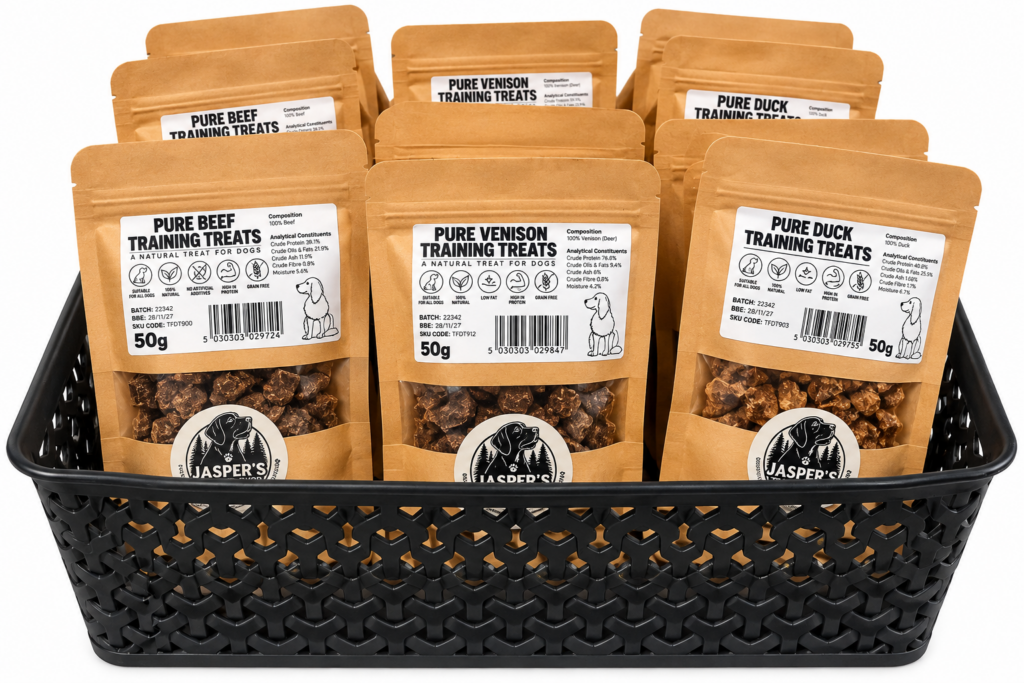
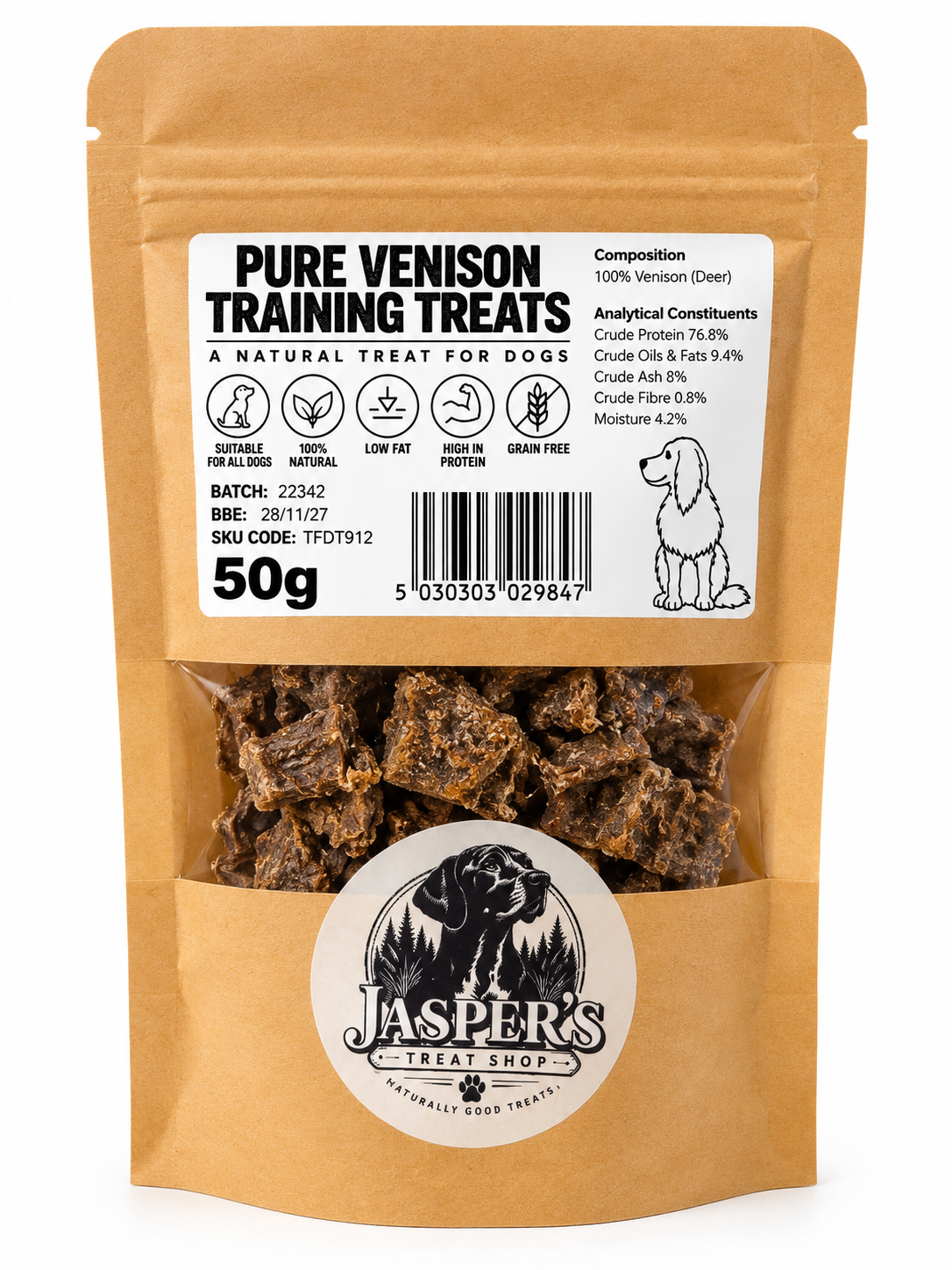
Jasper’s Treat Shop has a selection of pocket-sized and training-style treats in the Dog Training Treats category. Always check the product details and packaging to confirm age suitability before offering them to a puppy.
Quick checklist before using a treat for puppy training
- Is the product marked suitable for puppies or does it include a minimum age?
- Can the treat be broken into small pieces or is it quick to eat?
- Does the puppy find it motivating (try a small taste test first)?
- Have you accounted for treats within daily food allowance?
- Is the treat easy to carry and store while you’re out training?
Final tips
Keep training sessions short and fun. Vary rewards — food, praise and play — so your puppy doesn’t become dependent on food alone. Start with tiny, frequent rewards and gradually reduce the food used as behaviours become reliable. And always check the manufacturer’s guidance on the packaging for minimum age and feeding instructions.
For more on choosing treats of the right type and value, take a look at our broader guide: How to Choose the Best Training Treats for Your Dog.
Frequently asked questions
When can puppies start having training treats?
Check the product packaging for any minimum-age recommendation and follow the manufacturer’s advice. If you’re unsure whether a particular treat is suitable for your puppy, ask your vet or breeder. Treats should be included as part of the puppy’s overall daily food allowance.
How big should training treats be for puppies?
Treats for training should be small — often pea-sized — so you can reward frequently without adding too many calories. Many commercial training treats can be broken into even smaller pieces if needed.
How often can I give a puppy treats during training?
You can reward frequently during short sessions to reinforce behaviour, but count treats as part of daily food. Use very small pieces or kibble for high-frequency practice and save richer, higher-value treats for challenging exercises.
Can I use natural treats for puppy training?
Yes, many natural treats are suitable for training if they meet the needs above (small, palatable, quick to eat). Always check the packaging for age guidance and feeding instructions before giving a natural treat to a puppy.
What should I check on the packaging before giving treats to my puppy?
Look for minimum-age recommendations, feeding guidance, ingredient lists and any storage or safety instructions. These details help you decide whether a treat is appropriate for your puppy’s size and stage.