When people talk about “high-value dog treats” they usually mean rewards that motivate a dog more strongly than ordinary kibble or everyday snacks. In training, those extra-motivating rewards can make the difference between a quick response and a distracted dog. Importantly, “high value” isn’t a fixed property of a specific ingredient or price—it’s personal to the dog and can vary with the situation.
High value vs everyday rewards: what’s the difference?
Everyday rewards are useful for routine training and maintenance. These are treats you can give frequently without changing the dog’s appetite or routine. High-value rewards are saved for situations where you need extra motivation—for example, when the dog is highly distracted, learning a new behaviour, or practising recall near other dogs or wildlife.
When trainers choose higher-value rewards
- Recall practice in busy or open areas where distractions are strong.
- Teaching or shaping new, complicated behaviours that require sustained focus.
- Reinforcing behaviours that are particularly important for safety (e.g. leaving dangerous items).
- Working under heavy distraction (other dogs, food, wildlife, loud noises).
What makes a treat high-value to your dog?
High value is measured by how much a dog prefers one reward over another. The same treat might be irresistible to one dog and merely pleasant to another. Likewise, a treat your dog loves at home may be less motivating in a park full of smells.
Desirable characteristics for training rewards
- Small size: Pocket-sized pieces that can be eaten quickly keep sessions moving.
- Portability: Easy to carry in a pocket or treat pouch without creating mess.
- Strong aroma and palatability: Smell often drives a dog’s interest, especially at a distance.
- Soft or easily chewable texture: Allows quick consumption so the dog is ready for the next repetition.
- Low distraction to eat: Avoid rewards that take a long time to chew in the middle of a session.
- Breakability: Can be split into smaller pieces so you can reward many repetitions without overfeeding.
Reward value varies by dog and context
Your dog’s preferences will depend on breed, age, previous exposure, and individual taste. A very food-motivated dog might find most treats high value; others may respond more to play, praise, or access to a favourite toy. Environment also matters: what works indoors during a calm training session might not work near an off-lead dog or at the beach.
Examples from Jasper’s Treat Shop (as training options)
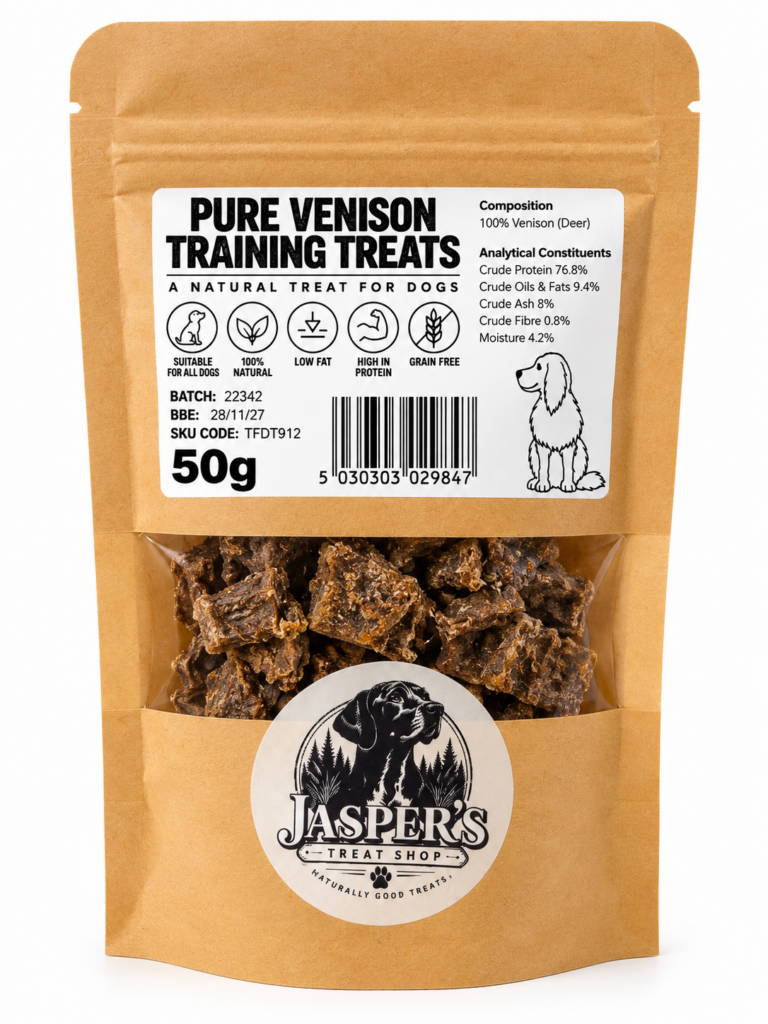
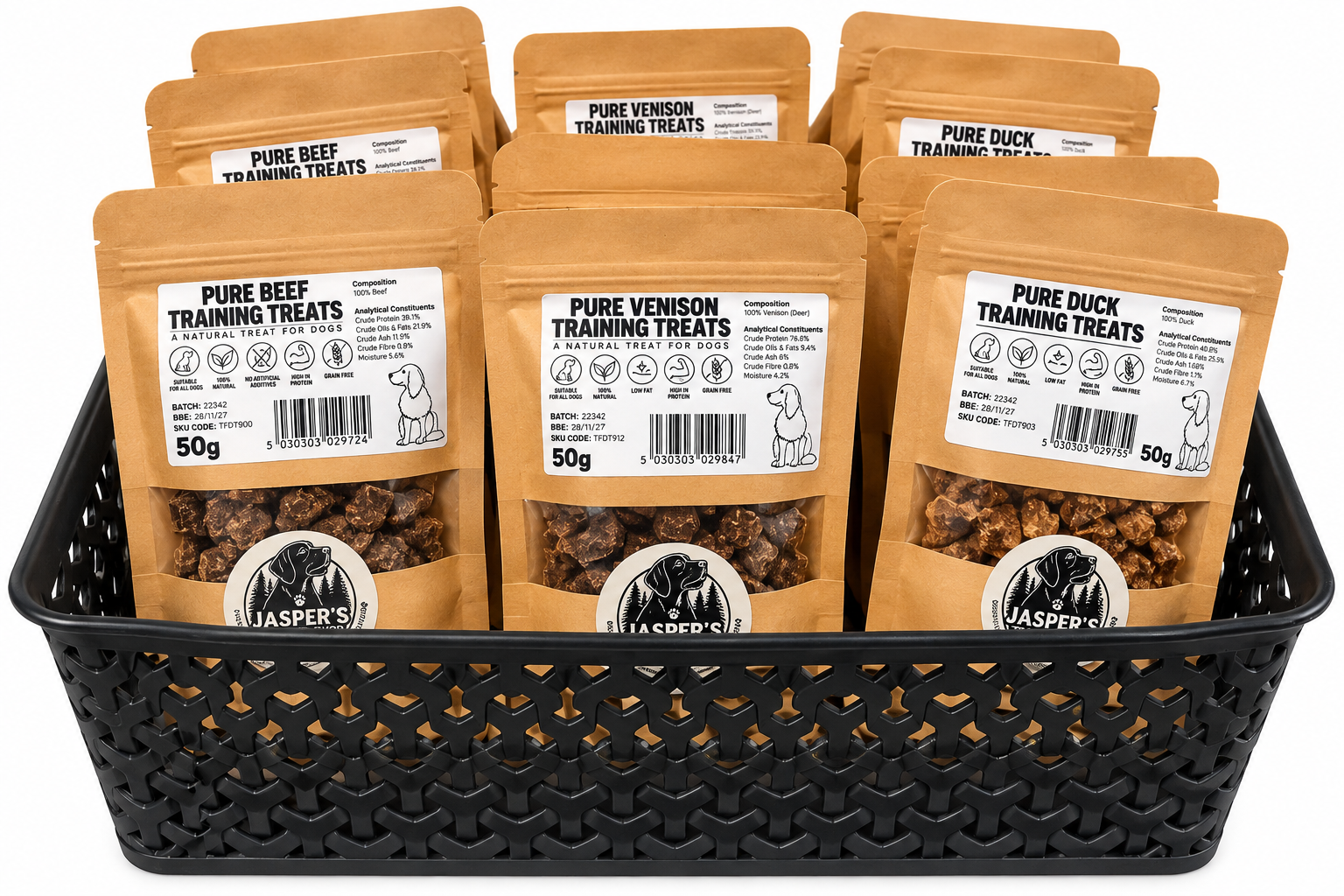
Jasper’s Treat Shop offers pocket-sized training treats in a few different proteins that many owners use in short training sessions. For instance, the Pure Beef Training Treats, Pure Duck Training Treats and Pure Venison Training Treats are examples of compact, easily carried rewards that can be used during training. Remember: we’re not claiming any single product is high-value for every dog—only that pocket-sized, quick-to-eat treats can be suitable formats for training.
Links to examples:
- Pure Beef Training Treats for Dogs
- Pure Duck Training Treats for Dogs
- Pure Venison Training Treats for Dogs
How to discover which treats your dog values most
Try these practical tests to find a winner:
1. Two-choice preference test
- Offer two different treats from your hand, one after the other, and let your dog choose. Repeat over several short trials.
- Make sure trials are calm and not influenced by hunger—run tests at similar times so results are consistent.
- Note which treat your dog approaches first or eats more eagerly.
2. Low vs high-distraction test
- Test a candidate treat at home in calm conditions first.
- Then try the same treat in a busier environment (park, near other dogs) during a short practice session. If the dog still responds quickly, it’s more likely to be useful as a high-value reward outdoors.
3. Speed and intensity check
A high-value treat should be eaten rapidly without the dog pausing to inspect it. If a treat causes the dog to slow down or drop focus while eating, it’s less useful for fast training repetitions.
Using high-value treats effectively
- Reserve them for hard work: Use stronger rewards when you really need them—novel behaviours, recall, or high-distraction practice.
- Keep portions small: Break treats into pea-sized pieces to avoid overfeeding and maintain motivation.
- Reinforce quickly: Reward immediately after the correct behaviour so the dog links action and reward.
- Mix with everyday rewards: Use a variable schedule—sometimes give a high-value treat, other times a lower-value one—so the dog stays interested.
- Change rewards as needed: Rotate flavours and types to prevent boredom. What’s high-value today may be less so next week.
Practical UK-focused tips
- Carry treats in a small pocket or treat pouch so they stay dry and accessible when out on walks in variable weather.
- Try different proteins if your dog seems bored—some dogs prefer duck or venison over beef, for example.
- For recall practice on common local walking routes, start with very high-value rewards at short distances and gradually increase difficulty.
- When training around wildlife (e.g. countryside walks), use your highest-motivating reward to help maintain safety and focus.
Further reading
For more on choosing training rewards and practical selection tips, see our guide: How to Choose the Best Training Treats for Your Dog. If you’re working specifically on recall, our article Best Treats for Recall Training: What Makes a Good Reward? explores suitable reward choices for recall practice.
Browse the wider selection of training treats here: Dog Training Treats and view our broader natural range at Natural Dog Treats.
Quick checklist: choosing a high-value training treat
- Small and easy to eat
- Strong aroma and palatable to your dog
- Portable and low-mess
- Can be broken into multiple pieces
- Works both at home and, ideally, in more distracting places
FAQs
- Q: Are high-value treats always meat-based?
A: No. While many dogs prefer meat-based treats, high value depends on the individual dog. Some dogs respond to cheese, cooked egg, or toy/play rewards—always choose what motivates your dog and what’s safe for them.
- Q: Can human food be used as a high-value reward?
A: Yes—many owners use small amounts of cooked, plain human food (e.g. small pieces of chicken) in training. Avoid toxic foods (like chocolate, grapes, onions) and check for ingredients your dog shouldn’t eat.
- Q: Will using high-value treats make my dog only obey for food?
A: Using high-value treats strategically doesn’t prevent other forms of reinforcement. As training progresses, you can transition to lower-value rewards, praise, or play. The aim is to build reliable behaviour, then use different rewards to maintain it.
- Q: How often should I use high-value treats?
A: Reserve them for situations where you need strong motivation—new behaviours, high distraction or safety-critical responses. Use small portions and mix with everyday rewards to keep them effective.
- Q: My dog ignores treats outdoors—what should I do?
A: Try higher-odour, softer treats and test them in increasingly distracting settings. Reduce session length, bring the dog closer initially, and reward frequently for small steps. Some dogs respond better to play or toys—experiment to find what works.
Finding the right high-value reward takes a little trial and observation, but once you discover what truly motivates your dog, training becomes more effective and enjoyable. If you’d like to explore pocket-sized training treats, take a look at our Dog Training Treats collection for options that many owners find convenient for out-and-about training.
Frequently asked questions
What makes a treat 'high value' for my dog?
High value depends on how strongly your dog prefers a treat compared with others. Factors that often increase value include strong aroma, palatable taste, small size, and a texture that’s quickly eaten. Individual preference and the training environment are the decisive factors.
Can high-value treats be human food?
Yes—many owners use small amounts of plain cooked human foods (for example, plain cooked chicken or turkey) as high-value rewards. Avoid foods that are toxic to dogs (such as chocolate, grapes, raisins, onions and garlic) and check for any ingredients your dog shouldn’t eat.
How do I use high-value treats for recall?
Use them for short, frequent practice sessions. Start close and reward reliably with a highly motivating treat, then gradually increase distance and distraction while ensuring the reward still motivates. Consistent, frequent reinforcement at the start helps build a reliable recall.
Are expensive treats always better for training?
Not necessarily. Price doesn’t determine value for your dog. What matters is whether the dog finds the treat motivating and whether it’s practical to use in training (small, quick to eat, portable).
How can I keep treats interesting over time?
Rotate flavours and textures, use a mix of high- and low-value rewards, and occasionally offer a surprise very high-value reward. Varying reinforcement keeps the dog engaged and prevents boredom.