Training treats are one of the simplest tools you can use to teach your dog good behaviour. But with so many options — soft bites, dried strips, long‑lasting chews and different proteins — it helps to be clear about what you need before you buy. This guide explains the features to look for, how to match treats to different training situations and practical tips for portioning and storage.
What makes a good training treat?
Not all treats are equally useful for training. For most training work you want something that is:
- Small and quick to eat — so you can reward many times in a short session.
- Highly palatable — tasty enough to capture your dog’s attention when you need it.
- Soft or easily breakable — easy to divide into tiny pieces for frequent rewards.
- Portable and non‑messy — handy when you’re out and about or at class.
- Appropriate for your dog’s size and dietary needs — consider any sensitivities or allergies.
Match the treat to the training task
Everyday training and basic cues
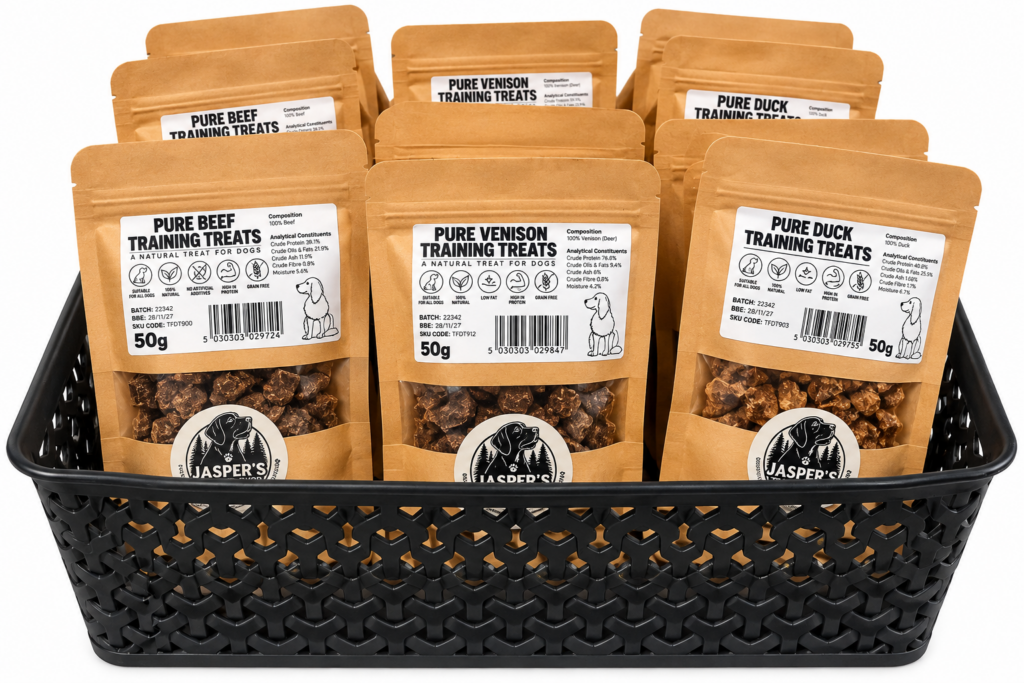
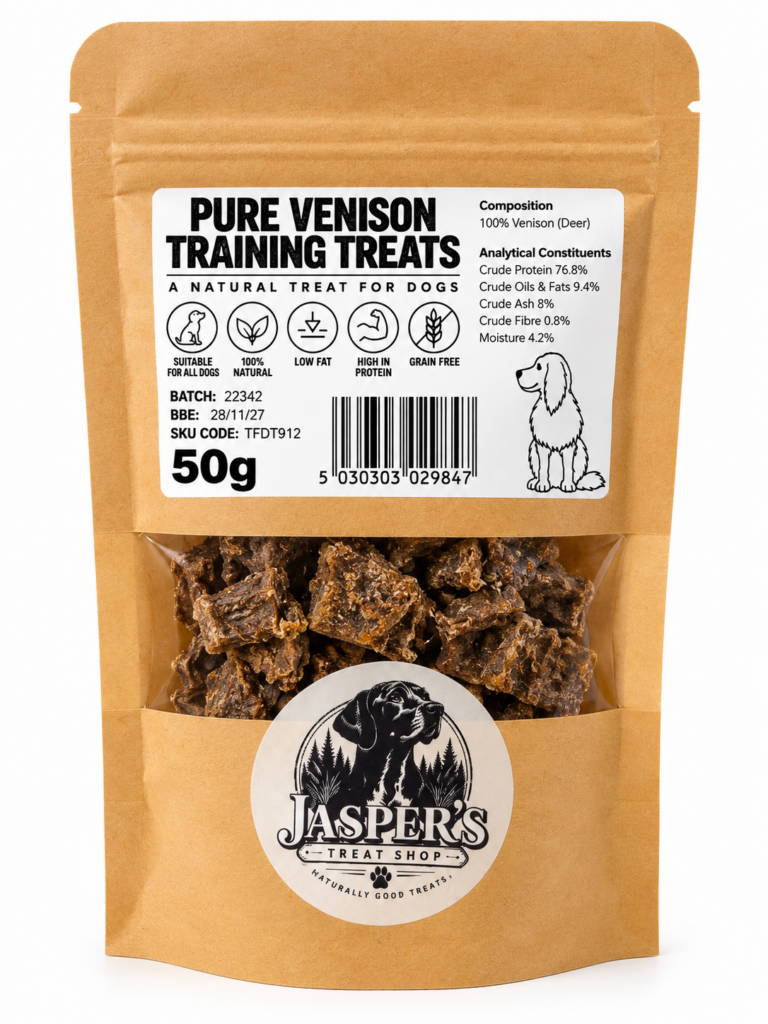
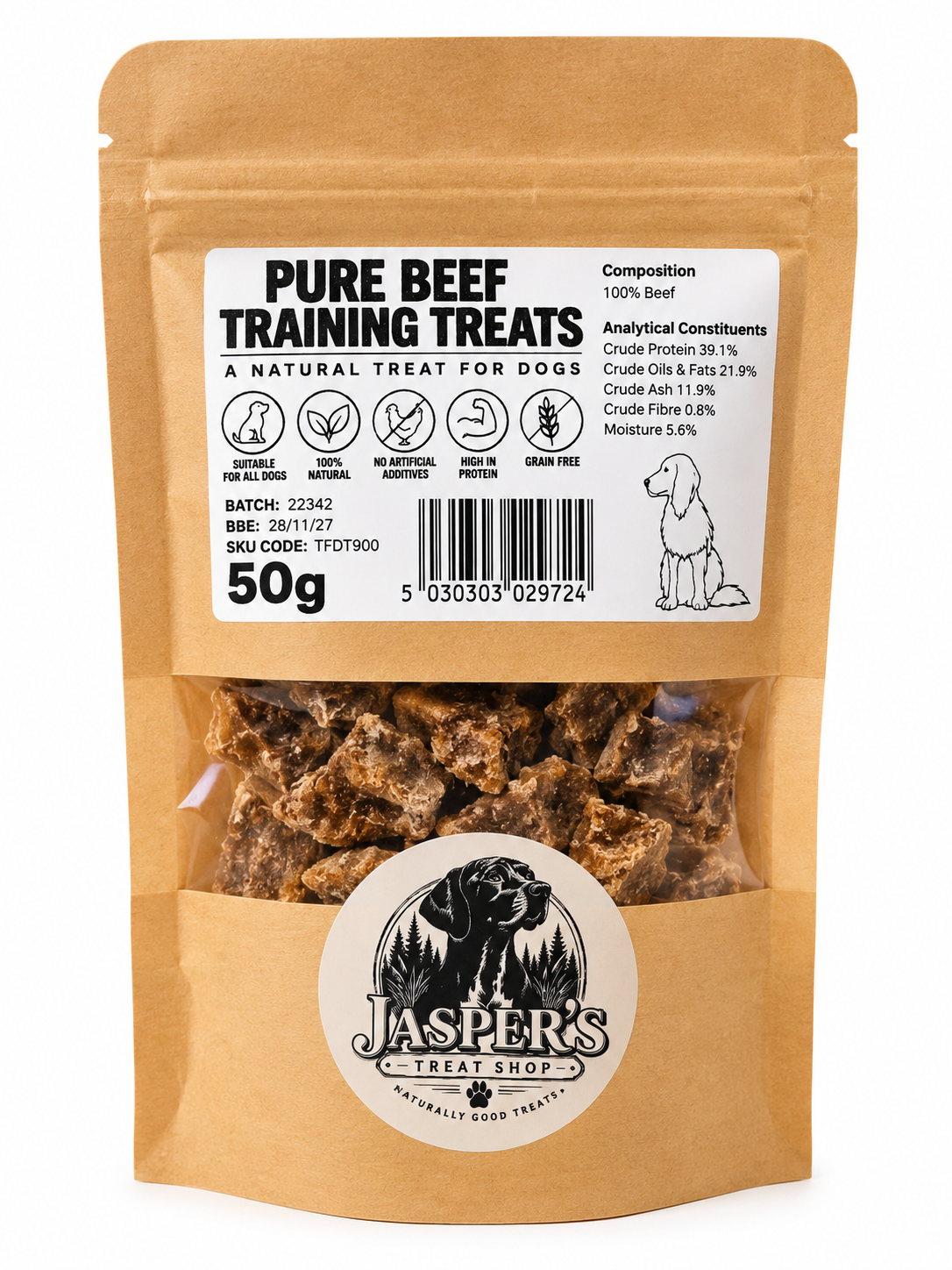
For cues like sit, lie down, come, or loose lead walking, you’ll want a treat you can give quickly and frequently. Pocket‑sized, soft training bites work well because you can reward several times in quick succession without interrupting the session. Jasper’s Treat Shop stocks purpose‑made, pocket‑sized training treats that are convenient for this use, such as the Pure Beef, Pure Duck and Pure Venison Training Treats (50g).
High‑value rewards for distraction or distance work
When you’re asking your dog to work in a difficult situation — distractions, distance, or proofing a behaviour — use higher‑value treats that your dog finds extra motivating. These should still be small or easily broken down, so a strong reward doesn’t mean a long pause while the dog eats.
Long‑lasting chews for quiet time, not training
Long‑lasting chews such as sow ears, lamb ears or tripe sticks are great for keeping dogs occupied at home, but they’re usually too slow to eat to use as immediate training rewards. Save these for downtime rather than repetitive training sessions. See examples like Sow Ears and Lamb Ears with Fur on the Jasper’s Treat Shop site if you’re looking for long‑lasting chews.
Think about size, texture and calories
One of the most common mistakes is using treats that are too large or too calorific for frequent training. Practical tips:
- Cut larger treats into pea‑sized pieces for small dogs and puppies; in bigger dogs you can use slightly larger pieces.
- Soft textures and air‑dried bites are easier to break up than hard chews.
- Use a mix of high‑value and low‑value rewards in a session: high value when you need buy‑in, lower value for repetition and maintenance.
Always factor treats into your dog’s daily food allowance: if you use many treats during training, reduce their main meal portion slightly for the day to keep calorie balance in mind.
Choose treats to suit dietary needs and preferences
If your dog has a food sensitivity, try single‑protein options so you can identify what they tolerate best. Jasper’s Treat Shop has a choice of proteins among the training treats and natural treats — beef, duck, venison and more — allowing you to test what your dog prefers. For dogs who love variety, rotating proteins can help keep interest high.
Puppies and older dogs
Puppies benefit from small, soft treats that are easy on developing teeth. Older dogs with dental issues may also prefer softer bites. Always supervise puppies using chews and avoid anything that could be a choking risk for very young puppies.
Packaging, shelf life and portability
Training often happens outside the home, so look for resealable, pocket‑sized packaging that keeps treats fresh and easy to access. Small 50g training pouches are handy for a session; larger packs may be better value for regular trainers but take a small portion out for your pocket when you head out.
If you buy longer‑lasting natural chews at home (for example to calm your dog while you’re busy), store them in a cool, dry place and follow any storage guidance on the pack.
Using treats effectively in training
- Reward the behaviour you want immediately — timing matters more than the treat itself.
- Start with continuous rewards (every success) then move to intermittent rewards as the behaviour becomes reliable.
- Keep sessions short and frequent — 5–10 minutes, two to four times a day is often effective for many dogs.
- Use a mix of verbal praise and treats so your dog doesn’t only work for food.
- Fade treats gradually for behaviours you want your dog to perform without expecting food every time.
Practical shopping checklist
- Purpose: Is this for quick training rewards or a longer chew session?
- Size: Can the treat be broken into tiny pieces for frequent reinforcement?
- Protein: Do you need a single protein option for sensitivities?
- Portability: Is the packaging pocket‑friendly and resealable?
- Storage: Can it be kept fresh between walks and sessions?
For quick training rewards, consider the pocket‑sized 50g training treats available in Beef, Duck and Venison on the Jasper’s Treat Shop site. For longer chew sessions at home, browse the Natural Dog Chews category for options like lamb ears and sow ears.
When to ask for help
If your dog is not food‑motivated, or if behaviours aren’t improving with consistent, reward‑based training, consider a qualified, reward‑focused trainer who can assess training technique and help tailor a plan and treat strategy. If you’re unsure about diet choices for medical reasons, consult your veterinary professional for personalised advice.
Quick product links and where to look on our site
- Dog Training Treats category — pocket‑sized options designed for training sessions.
- Pure Beef Training Treats for Dogs – 50g — a common choice for everyday training.
- Pure Duck Training Treats for Dogs – 50g — an alternative protein for dogs who prefer or need variety.
- Pure Venison Training Treats for Dogs – 50g — another single‑protein option.
- Natural Dog Chews — for longer, at‑home chewing sessions (not for rapid training rewards).
Summary
Choose training treats that are small, tasty, easy to eat and portable. Match the treat type to the task — small soft bites for repeated rewards, higher‑value pieces for tricky work, and long‑lasting chews for quiet time at home. Consider your dog’s size, age and any dietary sensitivities, and keep sessions short, timely and consistent. With the right treat strategy, training becomes more enjoyable and effective for both of you.
Frequently asked questions
How many treats should I give during a training session?
Keep sessions short (5–10 minutes) and reward each correct response, but use very small pieces so you can give many rewards without overfeeding. For frequent training across the day, reduce meal portions slightly to keep overall intake sensible.
Can I use ordinary kibble as training treats?
Yes — if your dog finds kibble motivating it can be an effective, low‑cost option. For high‑distraction situations or if your dog is less food‑motivated, you may need something tastier or a different protein to get their attention.
Are long‑lasting chews suitable for training?
Long‑lasting chews are usually too slow to eat for use as immediate training rewards. They’re better for occupying your dog during downtime. For training, pick something quick to eat and easy to break into small pieces.
What treats are best for puppies?
Choose small, soft treats that are easy for young mouths to manage. Break larger treats into tiny pieces and supervise chewing. Puppies also benefit from very short, frequent training sessions.
How do I choose treats for a dog with food sensitivities?
Opt for single‑protein treats and introduce a new protein gradually to check tolerance. Jasper’s Treat Shop offers single‑protein training treats in options such as beef, duck and venison that can help you identify what suits your dog best.