Introduction
Recall is one of the most useful skills you can teach a dog, and the right reward speeds learning. This guide explains what to look for in the best treats for recall training, how “high value” works in practice, and how to adapt rewards as your dog improves. It’s aimed at UK dog owners who want practical, everyday tips rather than advertisements.
What makes a good reward for recall?
A great recall treat has a few consistent features. When you’re choosing rewards, think about four practical qualities: reward value, size and calories, aroma and palatability, and speed of consumption.
1. Reward value (what “high value” really means)
“High value” is a relative term: a treat that’s irresistible to one dog might be only middling to another. In training it simply means the reward is more motivating than typical everyday food or toys. High value treats are typically those your dog finds particularly tasty, novel or rare. Use these for early training and when you need to compete with distractions (other dogs, wildlife, or interesting smells on a walk).
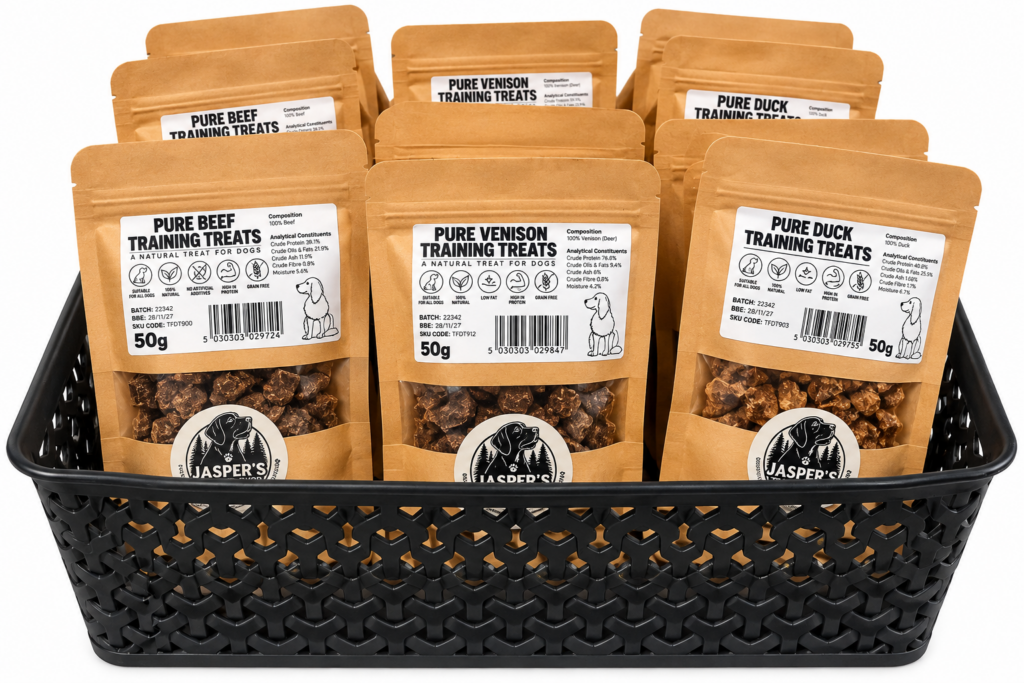
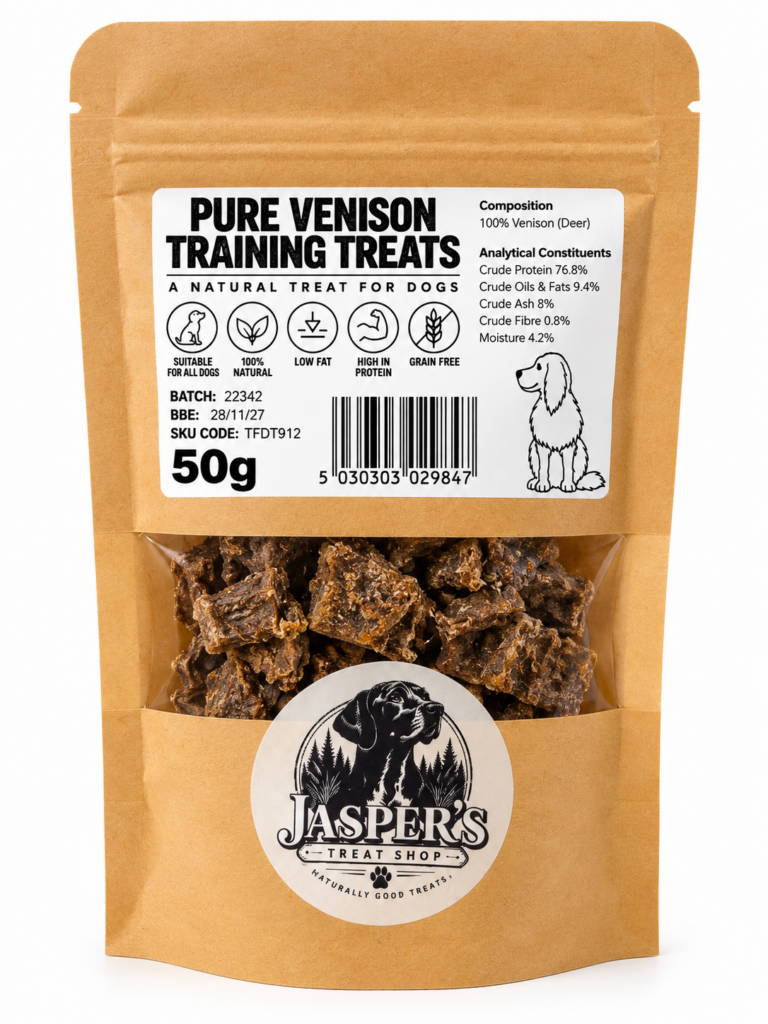
Examples of high value rewards include small pieces of strong-smelling jerky or pocket-sized training treats rather than the dog’s regular kibble. Jasper’s Treat Shop offers natural pocket-sized training treats in Beef, Duck and Venison that many owners find handy for recall sessions; you can view these in the Dog Training Treats category for ideas.
2. Small size and low calories
Recall training typically involves repetition. To keep sessions short and rewarding without overfeeding, choose small treats or break larger ones into tiny pieces. Treats that can be eaten in one or two mouthfuls mean you can reward several successful recalls during a short walk without interrupting the flow of training.
Tip: decide on a treat budget for a session (for example, a handful of small pieces) and adjust portion size so your dog gets multiple rewards without too many extra calories.
3. Aroma and palatability
Smell is a major driver of canine interest. Stronger-smelling treats are often more effective as high-value rewards because they stand out from the environment. That said, every dog is different: for some, novel textures or rare proteins are more motivating than scent alone.
4. Rapid consumption for repeated training
During recall practice you want the dog to return, get the reward and then be ready for the next trial quickly. That’s why fast-to-eat treats—soft chews, small jerky pieces or tiny meat bites—work well. Avoid treats that take a long time to chew when you need repeated, short trials.
Convenience and practicality
Recall training often happens out and about. Choose treats that are easy to carry, won’t crumble everywhere, and are quick to access. Small treat pouches, sealed packets of pocket-sized treats, or resealable bags make life simpler. Consider weather and storage too: very soft treats can melt or become sticky in summer, while others may get hard in cold conditions.
Adapting rewards to the dog and the stage of training
Not every reward is right at every stage. Here’s how to match treats to progress:
- Early learning (near home, few distractions): Use mid-value treats that the dog gets frequently so the behaviour is repeated and rewarded consistently.
- Proofing in distractions (parks, other dogs, smells): Bring out your highest-value treats—what your dog finds hardest to resist—to outcompete distractions.
- Generalising and fading: As recall becomes reliable, mix in lower-value rewards or switch to intermittent rewarding so the dog learns to respond even when a treat isn’t guaranteed every time.
Always observe your dog’s interest. If a treat that used to be very motivating is losing its effect, rotate to something different for a while.
Examples: Recall-training sequences you can try
Short-distance, high-success session (at home or in a quiet garden)
- Call your dog in a happy tone: “Come!”
- If they approach, reward immediately with a small treat—something quick to eat like a tiny piece of training treat.
- Praise briefly, then repeat several times. Keep sessions to 5–10 minutes so the dog stays engaged.
Park proofing with distractions
- Begin near a low-distraction area. Reward successful short recalls with a high-value treat.
- Gradually increase distance and introduce mild distractions—another walker, a ball on the grass—rewarding more generously when the dog comes despite the distraction.
- For particularly tempting distractions, use your highest-value items and consider making the reward more than one treat immediately after the recall before returning to play.
Emergency or long-distance recalls
For rare, high-stakes recalls (if your dog slips the lead or you need them back quickly), use the absolute top-tier reward you know they’ll take. Practise long-distance recalls a few times so the dog understands the cue, but avoid regularly using ultra-special treats unless truly necessary.
Examples of treat types often used for recall
- Small meat jerky pieces (fast to eat, strong smell)
- Soft training treats (easy to break into tiny pieces)
- Freeze-dried or air-dried single-protein pieces (often quite aromatic)
- Small chunks of cooked meat or cheese (if your dog tolerates them and you can carry them safely)
Jasper’s Treat Shop sells pocket-sized training treats in Beef, Duck and Venison which are convenient examples many owners choose to try; they’re listed in the Dog Training Treats category and are handy when you need something small and motivating on a walk.
Practical tips for carrying and using recall treats
- Use a treat pouch with a drawstring or zip so you can get rewards out quickly without fumbling.
- Keep a mix of mid- and high-value treats—swap them according to the environment and how well your dog is responding.
- Break larger treats into smaller portions at home so you control treat size consistently.
- Reward immediately. Timing is crucial: treat within a second or two of the recall so the dog links the behaviour and the reward.
- Make your recall cue clear and upbeat—use a single word and praise; don’t scold your dog when they return, as this undermines the positive association.
When to change the reward
If your dog starts ignoring a particular treat, it’s time to try something different. Dogs get bored or adapt to repeated rewards; rotate flavours, textures and occasional novelty items to keep motivation high. Reserve truly special treats for the moments you most need them to keep those items effective.
Further reading and resources
For a broader look at choosing training treats, see our cornerstone guide: How to choose training treats for your dog. To browse pocket-sized training treats and other options, visit the Dog Training Treats category.
FAQs
1. What are the absolute best treats for recall training?
There’s no single “best” treat for every dog. The most effective rewards are those your individual dog finds more motivating than everyday food—often small, fragrant, easy-to-eat pieces. Experiment with a few options (including different proteins and textures) and note what gets the most consistent responses.
2. Can I use kibble for recall training?
Yes, kibble can work for some dogs, especially if used for frequent short sessions at home. However, in distracting environments many dogs are more motivated by something tastier or more novel than their regular meals.
3. How many treats should I use in a training session?
Keep sessions short and frequent. Use many small pieces rather than a few large ones so you can reward multiple successful recalls without overfeeding. Decide on a session portion beforehand and cut larger treats into smaller bits.
4. My dog ignores treats when other dogs are about — what can I do?
Use a higher-value reward when practising around other dogs, reduce distance, and start in lower-distraction scenarios before slowly increasing challenge. If necessary, practice recalls with a second person holding your dog at a short distance to work on gradual improvement.
5. How do I transition from treats to less frequent rewards?
Gradually reduce the frequency of treats once recall is reliable. Mix in praise, play or occasional higher-value rewards on a variable schedule so your dog remains motivated even when a treat doesn’t follow every recall.
If you’d like to see training treats we stock, browse the Dog Training Treats category or look at the Beef, Duck and Venison training treats available as pocket-sized options at Jasper’s Treat Shop.
Frequently asked questions
What are the absolute best treats for recall training?
There’s no single “best” treat for every dog. The most effective rewards are those your individual dog finds more motivating than everyday food—often small, fragrant, easy-to-eat pieces. Experiment with different flavours and textures to see what works best for your dog.
Can I use kibble for recall training?
Yes, kibble can work for some dogs, especially for short sessions at home. In distracting environments, dogs are often more motivated by tastier or more novel treats than their regular food.
How many treats should I use in a training session?
Keep sessions short and use many small pieces rather than a few large ones so you can reward multiple successful recalls without overfeeding. Pre-portion treats or break larger treats into tiny bits.
My dog ignores treats when other dogs are about — what can I do?
Use a higher-value reward, reduce distance, and start training in lower-distraction areas. Gradually increase difficulty and consider practising with a second person to help with progressive proofing.
How do I transition from treats to less frequent rewards?
Gradually reduce treat frequency as recall becomes reliable. Mix in praise, play or occasional higher-value rewards on a variable schedule so your dog stays motivated even when a treat isn’t given every time.