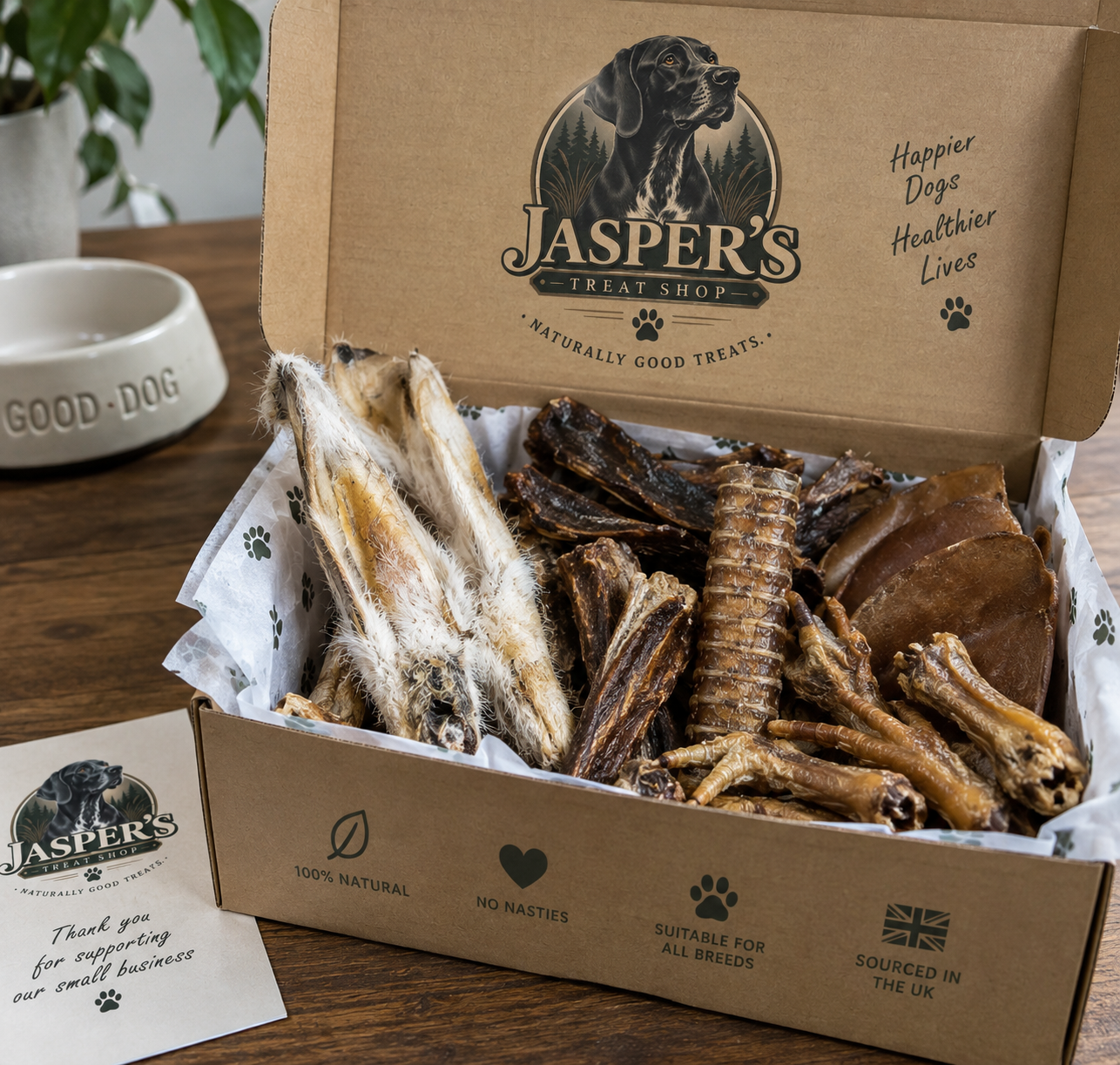
If dogs were allowed to answer this question themselves, “the one in your hand” would probably win by a landslide.
The honest answer is slightly less exciting, but much more useful: there is no single treat that is healthiest for every dog. A good treat is safe, appropriately sized, enjoyable and suitable for the individual dog. It should complement a complete, balanced diet rather than quietly becoming a second dinner.
For many healthy adult dogs, sensible choices include tiny pieces of plain cooked lean meat, dog-safe vegetables such as carrot or green beans, a small portion of their usual food, or a clearly labelled treat with a short ingredient list. The right choice can change with a dog’s age, size, health, allergies, activity level and reason for being rewarded.
At Jasper’s Treat Shop, we are naturally fond of treats. Jasper would happily volunteer for product testing every day of the week. But even enthusiastic treat testers need sensible portions.
This guide explains what vets generally look for in a suitable treat, how the 10% rule works, which ingredients to avoid and how to make straightforward homemade dog treats without turning your kitchen into a canine bakery.
Quick answer: The healthiest treat for a dog is usually a small, safe and minimally seasoned portion that suits that particular dog. Keep all treats together to no more than around 10% of the dog’s daily calories, unless your vet has advised otherwise.
What makes a dog treat healthy?
“Healthy” is not simply another word for natural, homemade, grain-free or high-protein. Those descriptions may tell you something about a product, but none guarantees that it is suitable for your dog.
A sensible treat should pass five basic checks:
- It is safe for dogs. It contains no toxic ingredients and presents no obvious choking, splintering or blockage risk.
- It suits the individual dog. The size, texture and ingredients are appropriate for the dog’s age, body size, chewing style and health.
- The portion is controlled. Even nutritious ingredients can contribute to weight gain when portions are too large.
- You know what is in it. A clear composition makes it easier to avoid ingredients your dog cannot tolerate.
- It has a purpose. A tiny reward may be ideal for training, while a larger chew requires a different approach and closer supervision.
If you prefer ready-made options, our natural dog treats are listed with composition and feeding information wherever it has been supplied. For more help comparing ingredients, textures and treat types, read our complete guide to natural dog treats.
What do vets recommend for dog treats?
Veterinary advice normally focuses less on finding one “superfood” and more on keeping treats safe and proportionate.
Common recommendations include:
- Keep treats small, particularly when you are rewarding repeatedly during training.
- Count treats as part of the day’s food rather than as free extras.
- Use part of the dog’s measured daily food allowance as rewards when appropriate.
- Choose plain, unseasoned ingredients and avoid added salt, sugar, sauces and rich cooking fats.
- Introduce unfamiliar foods gradually and one at a time.
- Select a size and texture that suit the dog, and supervise chews.
- Ask your vet before changing treats if your dog has allergies, digestive disease, pancreatitis, diabetes, kidney disease, weight problems or a prescription diet.
The World Small Animal Veterinary Association advises that treats should account for no more than 10% of a dog’s daily calories. The PDSA gives similar advice and suggests setting aside part of the dog’s normal daily food for use as rewards.
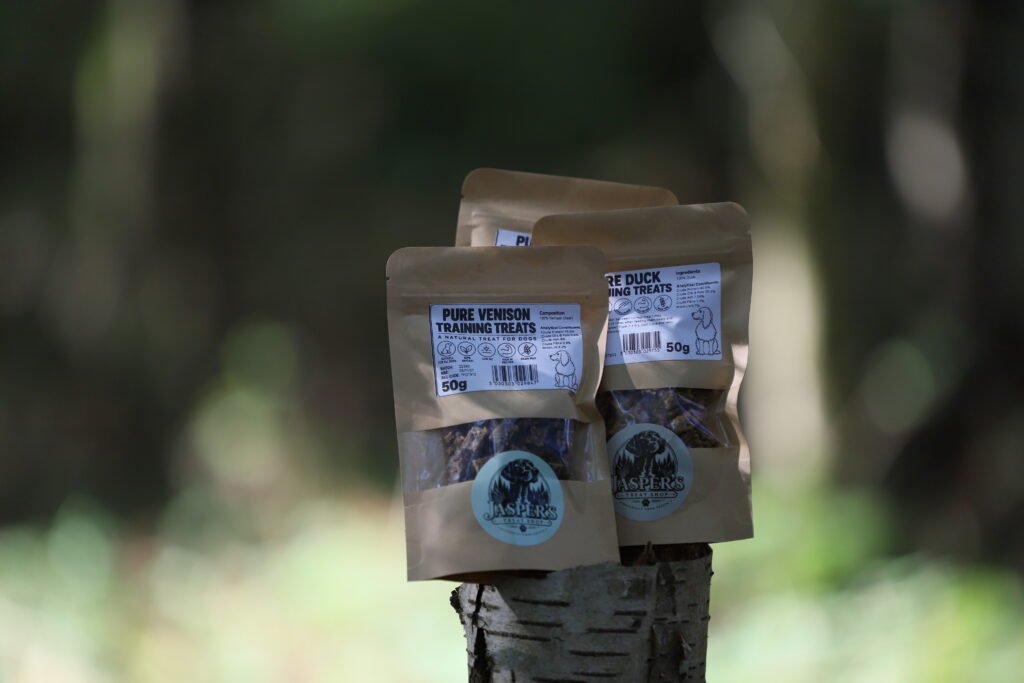
For training, the best reward is often something very small that your dog values and can eat quickly. Our dog training treats include compact options in different proteins, while our guide to high-value dog treats explains when an extra-special reward may be useful.
What is the 10 treat rule for dogs?
It is more accurately called the 10% treat rule. It does not mean that every dog can have ten treats a day.
The rule means that all extras combined should generally supply no more than 10% of a dog’s daily calorie intake. At least 90% should come from an appropriate complete and balanced diet.
That distinction matters because ten treats can mean very different things. Ten tiny training pieces may contain fewer calories than one large biscuit or chew. A small dog also needs considerably fewer calories than a large, active dog.
Include everything outside the normal meal allowance when estimating the treat total:
- Training rewards
- Dental treats
- Chews
- Food placed in enrichment toys
- Table scraps
- Homemade treats
- “Just one little piece” supplied by every member of the household
If you use food frequently during training, make each piece tiny and reduce the dog’s meal allowance appropriately. Your vet can help you calculate a more precise daily calorie target if your dog needs to lose weight or has a medical condition.
Should I give my dog a treat every day?
For many healthy dogs, a small daily treat is perfectly reasonable when it is suitable for them and included within their daily food allowance.
The important question is not simply how often you give a treat, but how much you give across the whole day. Several family members rewarding the same dog can turn a modest allowance into a surprisingly large amount.
It is also worth remembering that rewards do not always need to be edible. Dogs may value:
- A game with a favourite toy
- Praise and attention
- A sniffing break on a walk
- Access to the garden
- A short training game
- A gentle fuss, if that particular dog enjoys it
Food is a useful reward, especially during training, but it does not have to be the only way you tell your dog they have done something right.
What do I need for homemade dog treats?
You do not need specialist equipment. A basic homemade treat setup usually consists of:
- One or two dog-safe ingredients
- A clean mixing bowl
- A fork, spoon or food processor
- A baking tray and reusable liner or baking paper
- A knife or small cutter
- An airtight container
- Space in the fridge or freezer for safe storage
Small silicone moulds can be useful for frozen treats, but they are optional. Avoid making large, decorative biscuits simply because they look appealing to humans. Small pieces are easier to portion and much more useful for training.
Use plain ingredients with no seasoning, sauces, stock cubes or sweeteners. Check every label, even on familiar products. Peanut butter, for example, must never contain xylitol, which may also appear as birch sugar, wood sugar or birch bark extract.
Top 10 healthy homemade dog treats
These are simple occasional treats for generally healthy adult dogs. They are not designed to replace complete dog food. Introduce new ingredients gradually, serve small portions and check with your vet if your dog has a health condition or follows a restricted diet.
1. Plain cooked chicken training pieces
Poach or steam an unseasoned, skinless chicken breast until fully cooked. Allow it to cool, then cut it into very small pieces.
These pieces are useful for training because they are soft and quick to eat. Keep a small amount in the fridge and freeze the rest in training-sized portions. Never add onion, garlic, stock or seasoning.
2. Banana and oat mini biscuits
Mash one ripe banana and mix it with approximately 100g of plain oats. Shape the mixture into small, flat pieces and bake at 170°C conventional or 150°C fan until firm, usually around 12–18 minutes depending on thickness.
Banana contains natural sugar, so keep the biscuits genuinely small rather than making human-sized cookies.
3. Pumpkin and oat buttons
Combine approximately 120g of plain pumpkin purée with 120–140g of oats. Form tiny buttons and bake at 170°C conventional or 150°C fan until set.
Use plain pumpkin only—not sweetened pie filling or a spiced mixture. Check the label for added sugar, sweeteners and spices.
4. Slow-baked sweet potato slices
Wash and thinly slice a sweet potato, keeping the pieces appropriate for your dog’s size. Bake at a low temperature until dried and flexible or crisp, turning them during cooking.
The drying time varies according to thickness and moisture, so watch them carefully and do not allow them to burn. These are still calorie-containing treats, not an unlimited vegetable snack.
5. Apple and oat bites
Remove the apple’s core, seeds and stalk completely. Finely grate the flesh and combine it with enough oats to produce a mixture that holds its shape. Bake small flattened pieces until firm.
Apple seeds and the core should never be included. Keep portions small because fruit contains naturally occurring sugar.
6. Egg and oat training bites
Mix one egg with approximately 100g of oats. Spread the mixture thinly on a lined tray, bake until completely cooked and then cut it into tiny squares.
Thin pieces are easier to portion than thick biscuits. Make sure the egg is cooked through before serving.
7. Carrot and green bean crunch
Finely chop or grate plain carrot and green beans, then bind them with a beaten egg and a small amount of oat flour. Form small pieces and bake until cooked through.
Do not use canned vegetables packed in brine, and do not add salt, butter or seasoning.
8. Frozen blueberry and banana drops
Mash a small amount of banana, stir in crushed blueberries and spoon tiny drops into a silicone mould or onto a freezer-safe tray. Freeze until firm.
Serve one small drop at a time and supervise. Frozen treats may not suit dogs with sensitive teeth, dogs that gulp food or dogs that need a tightly controlled diet.
9. Plain fish flakes
Cook a plain, boneless piece of salmon or white fish thoroughly, without oil, butter or seasoning. Check carefully for bones, allow it to cool and divide it into tiny flakes.
Fresh cooked fish is highly perishable, so refrigerate promptly and freeze anything that will not be used very soon.
10. Single-ingredient vegetable rewards
Small pieces of raw or lightly steamed carrot, plain green beans or a little celery can be useful low-fuss rewards for dogs that enjoy them. Cut everything into an appropriate size and introduce it gradually.
Not every dog digests every vegetable comfortably. Start with one or two small pieces rather than a full bowl.
What are some homemade two-ingredient dog treats?
The simplest combinations from the list above are:
- Banana and oats: mash, shape and bake.
- Plain pumpkin and oats: combine, shape and bake.
- Egg and oats: mix, spread thinly, bake and cut.
- Apple and oats: remove the core and seeds, grate, combine and bake.
- Banana and blueberries: mash together and freeze in tiny portions.
Two ingredients do not automatically make a treat healthy, but a short recipe makes it easier to understand what your dog is eating.
If you use oats, choose plain oats without flavouring or sweetener. If you use a packaged purée, read the entire ingredient list. “No added sugar” does not necessarily mean “no sweetener”.
How can I make my own healthy dog treats?
Use this straightforward process:
1. Decide what the treat is for
Training treats should be tiny and quick to eat. A frozen treat or larger biscuit may be better suited to an occasional snack at home. Do not make a large chew when what you really need is a rapid training reward.
2. Choose a familiar, dog-safe base
Start with an ingredient your dog already tolerates, such as their usual food, plain cooked lean meat, carrot or oats. Introducing several unfamiliar ingredients at once makes it difficult to identify the cause if your dog develops an upset stomach.
3. Keep the recipe plain
Dogs do not need sugar, salt, icing, butter, oil, sauces or seasoning added to treats. Plain may look less exciting to us, but dogs judge food rather differently.
4. Make the pieces small
Small treats give you more opportunities to reward without using the entire daily allowance in five minutes. Cut baked sheets into tiny squares instead of making oversized bone-shaped biscuits.
5. Cook ingredients safely
Cook meat, fish and egg thoroughly. Prevent cross-contamination by cleaning hands, worktops and utensils. Remove fruit stones, cores and seeds where required, and check fish carefully for bones.
6. Cool and store them properly
Allow cooked treats to cool completely before storing. Homemade food does not contain the preservatives used in many commercial products, so treat it as perishable. Refrigerate moist recipes promptly, freeze spare portions and discard anything that smells unusual, looks mouldy or has been left out too long.
7. Introduce one small piece first
Wait to see how your dog responds before offering more. Stop feeding the new treat if it causes vomiting, diarrhoea, itching or another concerning reaction, and seek veterinary advice when appropriate.
If you want further practical guidance on portioning, supervision and storage, read how to choose, use and store natural dog treats safely.
What ingredients should not be in dog treats?
Some ingredients are unsuitable because they can be toxic; others add unnecessary calories or increase the risk of digestive upset.
Never knowingly use the following in homemade dog treats:
- Xylitol: a sweetener sometimes labelled birch sugar, wood sugar or birch bark extract. It can cause a rapid, life-threatening fall in blood sugar and may damage a dog’s liver.
- Grapes, raisins, sultanas and currants: these can cause kidney failure, and a reliably safe amount has not been established.
- Chocolate and cocoa: darker chocolate and cocoa powder are particularly dangerous, but no chocolate should be used in dog treats.
- Onion, garlic, leeks, shallots and chives: members of the allium family can damage red blood cells and cause anaemia.
- Macadamia nuts: these are toxic to dogs.
- Alcohol, raw bread dough and excessive caffeine: all can cause serious poisoning.
- Mouldy ingredients: mould toxins can cause severe illness, tremors and seizures.
Also avoid adding unnecessary salt, sugar, rich fats, stock cubes, artificial sweeteners or human protein powders. Never assume that a product is safe because it is described as natural.
Bones are not ingredients for homemade biscuits, but they deserve a warning of their own. Cooked bones may splinter, while both cooked and raw bones can cause dental injury, obstruction and internal damage. Speak to your vet if you need advice on an appropriate chew. Our guide to choosing natural dog chews covers size, texture and supervision in more detail.
What is a “silent killer” for dogs?
“Silent killer” is not a precise veterinary diagnosis, and using it for a single food can be misleading. In the context of homemade treats, however, xylitol is one of the most important hidden dangers.
It may be present in sugar-free confectionery, chewing gum, toothpaste, supplements and a small number of nut butters. In dogs, it can trigger a rapid release of insulin, causing blood sugar to fall dangerously. Liver damage may also occur.
Do not wait for symptoms if you think your dog has eaten xylitol, grapes, raisins, chocolate or another toxic ingredient. Contact your vet or an emergency veterinary practice immediately and take the packaging with you where possible. Do not try to make your dog vomit unless a veterinary professional specifically tells you to do so.
Weight gain can also develop quietly when treats are given little and often. It may be less dramatic than a poisoning emergency, but excess weight can have a serious effect on long-term health. This is another reason the 10% rule and honest portion sizes matter.
Are homemade treats healthier than shop-bought treats?
Not automatically.
Homemade treats give you direct control over the recipe, but they can still be too large, too rich or nutritionally unsuitable. They also have a shorter and less predictable storage life.
Well-labelled commercial treats have the advantage of a consistent composition and supplied feeding information. The better choice is the one that is safe, suits your dog and can be portioned sensibly.
If you are shopping rather than baking, look past the front of the packet and read the composition. Our natural dog treat collection lets you browse by treat type and protein, with product information shown on each listing.
What words do dogs love to hear the most?
There is no scientifically established top-ten list of words loved by every dog. Dogs learn that particular sounds predict particular outcomes, so their favourite words are usually the ones connected with things they enjoy.
Depending on the dog, that might include:
- Their name
- “Walk”
- “Dinner”
- “Treat”
- “Play”
- “Outside”
- “Good”
- “Yes” or another reward marker
- The name of a favourite toy
- The name of a favourite person
Research indicates that dogs can form mental associations with familiar spoken words, but experience, context, tone and consistency all matter. A cheerful “well done” followed by something the dog values is likely to mean far more than repeatedly using a supposedly magic word.
Use clear, consistent cues and avoid saying the same word for several different behaviours. Most importantly, make sure the words you want your dog to love are followed by fair, positive experiences.
The healthiest treat is the one that fits the dog
The healthiest treat is not necessarily the most expensive, the most fashionable or the one with the loudest claims on the packet.
It is a safe, appropriately sized reward that your dog enjoys, tolerates well and receives in sensible amounts. For one dog, that may be a piece of carrot. For another, it may be a tiny cube of cooked chicken, part of their normal meal or a carefully chosen single-protein training treat.
Keep the overall diet balanced, count every extra and introduce new foods gradually. If your dog has a medical condition, a history of pancreatitis, food allergies, weight concerns or a prescription diet, ask your vet before experimenting with homemade recipes.
And if Jasper offers to help with quality control, remember that his definition of an appropriate portion may differ slightly from yours.
Frequently asked questions
What is the single healthiest treat for a dog?
There is no single healthiest option for every dog. Tiny portions of plain cooked lean meat, suitable dog-safe vegetables, part of the dog’s normal food allowance or a clearly labelled treat can all be sensible choices. Suitability and portion size matter more than a fashionable ingredient.
Can dogs eat homemade treats every day?
Many healthy dogs can have a small homemade treat daily, provided every treat is safe and the total remains within their appropriate daily allowance. Reduce other food where necessary and introduce new ingredients gradually.
Are carrots healthy dog treats?
Plain carrot can be a useful occasional treat for many dogs. Serve it raw or cooked without seasoning and cut it to an appropriate size. Introduce it gradually because any unfamiliar food can cause digestive upset.
Can I use peanut butter in homemade dog treats?
Only use peanut butter after checking that it contains no xylitol or other unsuitable ingredients. Peanut butter is also calorie-dense and high in fat, so use only a small amount. A dog with pancreatitis, weight concerns or a restricted diet may need to avoid it entirely.
How many treats can a dog have each day?
There is no universal number. Treat size and calorie content vary enormously. Use the 10% calorie rule as a general ceiling and ask your vet for an individual target if your dog has weight or health concerns.
When should I ask my vet about treats?
Speak to your vet before changing treats if your dog has a diagnosed condition, food allergy, recurring digestive upset, dental problems, obesity or a prescription diet. Contact a vet immediately if you suspect your dog has eaten something toxic.
Sources
WSAVA: Feeding Treats to Your Dog
Blue Cross: Poisonous Foods for Dogs
Current Biology/PubMed: Neural Evidence for Referential Understanding of Object Words in Dogs